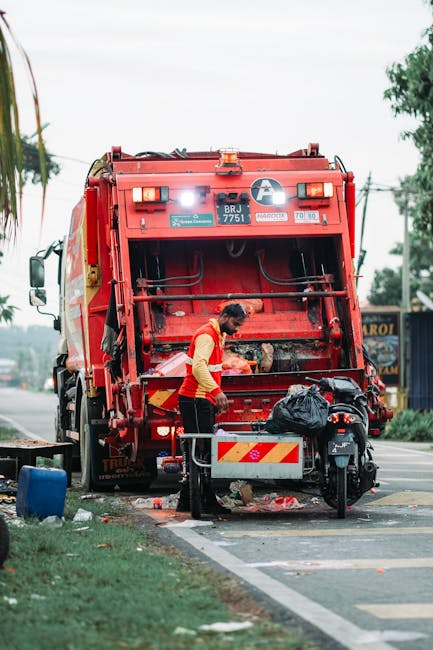
Narrow street access problems for Church Street rubbish trucks: a practical guide to safer collections
If you have ever watched a rubbish truck inch towards a tight bend, mirror folded in, brake lights glowing, you already know the problem: narrow street access problems for Church Street rubbish trucks can turn a simple collection into a slow, awkward manoeuvre. On busy residential streets, outside flats, or along a road with parked cars on both sides, the issue is rarely just the width of the truck. It is the whole picture - turning space, sightlines, kerb height, loading distance, and whether the crew can work without blocking neighbours or causing a nuisance.
This guide breaks down what the access issue really means, why it matters, how crews work around it, and what you can do to make a collection smoother. If you are planning a clearance, managing a property, or just trying to avoid a last-minute headache, you will find practical steps here that actually help. Truth be told, these jobs are often won or lost before the truck even arrives.
Why Narrow street access problems for Church Street rubbish trucks Matters
Narrow access is not a minor inconvenience. It affects whether a truck can reach the property at all, how long the job takes, how much manual carrying is needed, and whether the collection can be completed safely. On a street with limited width, parked vehicles, delivery vans, bins, railings, and sharp corners, even a well-sized truck may struggle to line up properly.
That matters for the customer first. If access is poor, your collection may need more labour, a different vehicle, or a staged approach. It also matters for the crew, because repeated reversing, tight turns, and carrying heavy items over longer distances raise the risk of damage, slips, and strained backs. Nobody wants a scratched wing mirror or a crushed wheelie bin, least of all on a Monday morning when everyone is already in a rush.
There is also a neighbourly side to it. A truck blocking the street can create tension quickly. Residents need access, emergency routes must remain open, and in many areas the timing of collections has to fit around local traffic patterns. So the access issue is not just operational - it is practical, social, and, yes, a bit logistical. One small street can behave like a full-scale traffic puzzle.
For homes, flats, shared buildings, and commercial premises on tighter roads, this is often the difference between a smooth clearance and a delayed one. If you are arranging house clearance, flat clearance, or even routine waste removal, access planning should happen before the van or truck turns the corner.
How Narrow street access problems for Church Street rubbish trucks Works
In practice, access assessment starts with a simple question: can the vehicle get to the waste, stop safely, and leave without damage or disruption? If the answer is uncertain, the crew will usually look at a few things.
1. Street width and turning room. A truck may fit along a road but still fail to turn into a narrower section or court. The turning circle often matters more than the straight-line width. That catches people out all the time.
2. Parked cars and street furniture. A road that is technically wide enough on paper can become tight in real life once cars are parked, bins are out, or there are bollards, lamp posts, railings, and low branches.
3. Loading distance. If the truck cannot stop close to the property, the crew has to carry items further. That is manageable for a few bags, but much less convenient for furniture, bulky waste, or builders' debris.
4. Surface and gradient. Slopes, broken paving, wet kerbs, and steps can slow things down and make handling awkward. A short uphill push with a heavy wardrobe is different from lifting a bag from the front gate, obviously.
5. Visibility and reversing risk. Tight streets often mean reverse manoeuvres. Good access planning tries to minimise these, because reversing in a narrow street is where mistakes happen fastest.
The crew then decides on the method. Sometimes the truck can park at a sensible point and the team carries waste out by hand. Sometimes a smaller vehicle is more suitable. Sometimes the job needs split loading, meaning waste is moved to a safer meeting point and then taken away in stages.
If the property is part of a business or managed site, the same logic applies to commercial collections too. The exact method changes, but the principle stays the same: safe access first, collection second. For larger jobs, business waste removal planning can be especially useful when access is shared with customers, staff, or delivery traffic.
Key Benefits and Practical Advantages
Good access planning may not sound exciting, but it saves time, money, and stress. That is the honest answer. It also gives you more control over the day itself, which is worth a lot when the street is tight and everyone is watching.
- Fewer delays: the collection starts with the right vehicle and the right plan.
- Lower risk of damage: less chance of clipping walls, gates, railings, or parked cars.
- Safer lifting: crews can choose the best route and reduce awkward carrying.
- Better cost control: when access is understood upfront, pricing is usually more accurate.
- Less disruption: neighbours, tenants, and passers-by experience fewer blockages.
- More suitable service choice: sometimes a smaller vehicle or a different clearance method is simply the better fit.
There is another benefit people overlook: peace of mind. If the operator has already checked access properly, you are less likely to get that awkward phone call saying, "We have arrived, but we cannot get down your road." Not a fun call. No one enjoys those.
For properties with awkward layouts, it can also make the difference between a partial and full clearance. For example, a loft or top-floor flat on a narrow street may need a team to work from the building entrance rather than the truck itself. That is where services such as loft clearance, home clearance, or office clearance become easier to manage when access is assessed properly.
Who This Is For and When It Makes Sense
This topic matters to anyone arranging waste collection on a tight street, but a few groups feel it most strongly.
Homeowners and tenants often face access issues when they live on terraced roads, mews-style streets, or by small estates where parking is tight. If you are clearing furniture, bags, or garden waste, the truck may not be able to pull right up to the door.
Landlords and managing agents need access planning when several flats share a narrow frontage or a back access lane. It is especially relevant if the collection has to be done between tenant move-out and a new occupancy date.
Businesses on busy or narrow streets may need out-of-hours collection, staged loading, or a vehicle that can fit around delivery bays. Shops, studios, and small offices often underestimate how quickly a front entrance can become blocked by one poorly parked van.
Builders and contractors should think about access before waste starts piling up. For heavier or sharper waste, like plasterboard, timber offcuts, and packaging, a good plan helps avoid a messy site. If the waste is coming from refurbishment work, builders waste clearance is usually far easier to organise when the access route is mapped out early.
When does it make sense to take access seriously? Always, really. But especially when you have any of the following:
- double parking on the street is common
- the road narrows sharply near the property
- you have bulky items like sofas or wardrobes
- the collection needs to happen at a set time
- there are shared entrances, gates, or steps
- you expect more than a few bags of waste
In short: if the collection looks straightforward from your front room window, that is nice, but it is not enough. Street-level reality has a habit of being less polite.
Step-by-Step Guidance
The best way to reduce access problems is to prepare in a simple, sensible order. You do not need to overcomplicate it.
- Measure the route, not just the driveway. Check the width at the narrowest point, note gates, corners, steps, low branches, and any parked-car pinch points.
- Identify where the vehicle can safely stop. A spot 20 metres away may be workable. A spot 80 metres away may still work, but the labour changes.
- List the items to be removed. Furniture, appliances, bags, and builder's waste all behave differently. A pile of loose rubbish is not the same as a dismantled wardrobe.
- Share photos from ground level. Stand outside, take a few angles, and show the actual approach. Pictures taken from the doorway can hide the tight bits, which is cheeky of them.
- Be honest about parking restrictions. If the street is routinely full, say so early. It is better to sound slightly pessimistic than to pretend there is space that does not exist.
- Confirm crew access to the property itself. Front door codes, lifts, basement steps, rear alleys, and shared corridors all matter.
- Agree the collection method. Decide whether the truck can approach directly, whether a smaller vehicle is better, or whether the team should collect by hand from a safer point.
- Prepare the waste in advance. Bag loose items, separate recyclables where possible, and dismantle anything that can be taken apart safely.
A useful habit is to walk the route once in daylight and once at the time the collection would actually happen. A street that feels open at 10 a.m. can feel completely different at 4 p.m. when cars are back, deliveries are arriving, and the bin lorry has already had its say.
Expert Tips for Better Results
The detail is where these jobs succeed. A few small choices can make the whole collection easier.
Keep the front area clear the night before. If wheelie bins, bikes, planters, or scooters are in the way, the crew loses time before the work even begins. It sounds obvious, but people forget this more often than you would think.
Separate what needs lifting from what can be dragged or wheeled. For example, rigid furniture should be ready to move, while bags should be stacked so they do not split open on the pavement. Wet cardboard and loose plaster dust are unpleasant companions on a narrow street.
Use smaller loads where needed. For access-limited streets, smaller loads can reduce trip time and keep the route safer. A truck does not need to be full to be efficient; sometimes a cleaner first trip is better than forcing one oversized one.
Think about neighbours. A polite heads-up can save a complaint if the work is likely to cause temporary obstruction. On tighter streets, even a short pause can feel longer to someone trying to get their bike out.
Plan for bad weather. Rain makes steps, paving, and kerbs trickier. Early morning frost is worse. Not dramatic, just true.
Ask about insurance and safety practices. If a company is used to awkward access, they should be able to explain how they reduce damage and handle manual lifting. You can also check broader trust signals like insurance and safety and health and safety policy information where available.
Expert summary: the best access plan is usually the simplest one that keeps the street safe, protects property, and avoids repeated manoeuvres. If the route feels tight, assume it is tight. Then work backwards from that.
Common Mistakes to Avoid
Some access issues are unavoidable. Others are self-inflicted, frankly. The good news is that a lot of them are easy to prevent.
- Assuming the truck will "just fit". That is rarely a reliable strategy on a narrow road.
- Sending only front-door photos. You need the approach route too, not just the curbside view.
- Ignoring parked car patterns. A road may be passable in the morning and blocked by lunchtime.
- Leaving bulky items inside. If furniture has to be dismantled, do it beforehand where safe.
- Overlooking rear access. Many properties have better access through a side passage, alley, or garden gate.
- Not checking loading restrictions. Some streets have practical limitations even if they look accessible on a map.
- Booking the wrong service type. A standard collection may not suit a very tight property; a different clearance format may be better.
One of the biggest mistakes is underestimating how much carrying is involved. If the truck cannot get close, the job becomes more physical. That does not make it impossible, but it changes the time and effort quite a bit. Better to know that before the crew arrives than discover it with everyone standing in the road, arms folded, wondering who misread the situation.
Tools, Resources and Recommendations
You do not need fancy equipment to deal with narrow access problems. A few practical tools and habits are enough.
- Phone photos and short video clips: useful for showing the access route, gate width, and parking pinch points.
- Basic tape measure: handy for gate openings, alley widths, and furniture pieces that may need dismantling.
- Notebook or checklist: keeps track of what is being removed and where it is stored.
- Torches or phone lights: useful for dim stairwells, basements, and rear lanes early in the morning.
- Protective gloves and sturdy footwear: sensible for anyone helping with sorting or moving items.
If your clearance is part of a larger property project, it can help to plan the route alongside the item list. For example, an emptying job might combine furniture clearance, furniture disposal, and a small amount of mixed waste. The more clearly you separate those loads, the easier the collection day becomes.
For properties with garages, gardens, lofts, or mixed storage spaces, it is worth checking the access at each point rather than assuming the main entrance tells the whole story. A neat front hall does not always mean an easy rear path. We have all seen that surprise side passage with the overgrown bush and the single wonky step.
Law, Compliance, Standards, or Best Practice
Access planning is not just about convenience. In the UK, waste collection and moving heavy items should be handled with proper care, and operators are generally expected to follow safe working practices, avoid obstruction where possible, and protect people and property. Exact legal duties can vary depending on the situation, the premises, and the local street conditions, so it is wise to treat this as a practical best-practice area rather than a one-rule-fits-all issue.
At a sensible minimum, good practice usually includes:
- safe vehicle positioning
- clear communication before arrival
- manual handling that avoids unnecessary strain
- consideration for pedestrians, neighbours, and traffic
- appropriate insurance and trained crews
- responsible sorting and disposal of collected waste
For customers, one useful safeguard is to read the company's published terms and service information before booking. If you want to understand how a provider explains payment, expectations, and service boundaries, terms and conditions, pricing and quotes, and payment and security pages can be helpful. They are not thrilling reads, admittedly, but they do save confusion later.
If sustainability matters to you - and it should, even for small clearances - it is worth checking whether reusable items are separated, recyclable materials are handled properly, and disposal routes are managed responsibly. A strong recycling and sustainability approach can make a real difference, especially when the truck is only one part of a wider waste solution.
Options, Methods, or Comparison Table
When access is tight, there is usually more than one way to complete the job. The right method depends on what is being removed and how narrow the route really is.
| Method | Best for | Pros | Limitations |
|---|---|---|---|
| Direct truck access | Wider streets with room to stop safely | Fast, efficient, usually simplest | Not suitable for tight bends or blocked roads |
| Smaller vehicle access | Narrow streets, short lanes, mixed parking | Easier manoeuvring, better in constrained areas | May require more trips or transfers |
| Hand-carry from a nearby stopping point | Flats, terraces, and roads with limited frontage | Flexible and often practical | More labour, longer completion time |
| Staged collection | Bulky loads or shared properties | Reduces congestion and confusion | Needs better planning and coordination |
In many real-world cases, the best option is not the most dramatic one. It is the one that keeps the job moving without creating avoidable friction. A slightly longer carry route can be the smart choice if it means the collection happens cleanly and no one is forced into a three-point turn in a street with nowhere to go.
Case Study or Real-World Example
Imagine a small terrace on a narrow residential street just off a busy high road. There are parked cars on both sides, the road bends near the midpoint, and the property has a short front path with two steps. Inside, there is a broken wardrobe, three bags of mixed household waste, and a couple of smaller items from a loft room.
At first glance, the job seems straightforward. But once the crew reviews the street, it becomes clear that a full-size truck would struggle to stop safely outside the door. So the job is adjusted. The vehicle parks at the closest safe point, the crew carries waste out in smaller loads, and the larger wardrobe is dismantled before moving. The route is kept clear, the neighbours are not blocked in for long, and the collection finishes without drama.
That is the kind of outcome you want. Not heroic, not flashy. Just tidy, calm, done.
In another common scenario, a flat above a small shop on a narrow street needs clearance after a tenant move-out. The entrance is busy, the pavement is tight, and deliveries are already scheduled. Here, access planning and timing matter more than brute force. The right approach may be an early arrival window, a smaller vehicle, and a focused removal list so the crew can work quickly without crowding the frontage.
Practical Checklist
Use this checklist before the truck or van arrives. It will save you time.
- Have I measured the narrowest part of the access route?
- Have I checked for parked cars, bollards, bins, or other obstacles?
- Have I shared clear photos of the street and entry point?
- Do I know where the vehicle can safely stop?
- Have I identified an alternative route or entrance if needed?
- Are bulky items ready to move or dismantled where safe?
- Have I told the provider about steps, slopes, gates, or locked entrances?
- Have I warned neighbours or building users if access may be briefly affected?
- Is there a realistic plan if a full-size truck cannot get through?
- Have I checked the provider's service details, insurance, and safety information?
If you can tick most of those off, you are in a strong position. If not, no panic. Just tidy up the plan before collection day rather than during it.
Conclusion
Narrow street access problems for Church Street rubbish trucks are really about one thing: making sure the right collection method matches the reality of the road. When access is tight, the best outcomes come from honest planning, clear photos, measured routes, and a bit of flexibility on the day.
That approach reduces delays, avoids awkward manoeuvres, protects property, and makes the job easier for everyone involved. Whether you are clearing a flat, a house, an office, or a mixed load from a busy street, the details matter more than people expect. But once those details are handled well, the whole thing feels much less stressful - almost boring, in the best possible way.
If you are still weighing up the best way to handle a tight-access collection, start with a proper quote and a clear description of the street. A small bit of planning now can save a lot of faff later, and that is usually worth it.
Get a free quote today and see how much you can save.
Frequently Asked Questions
What are narrow street access problems for rubbish trucks?
They are the practical issues that stop a truck from reaching a property safely, such as tight road widths, parked cars, sharp bends, steps, gates, and limited turning space. In simple terms, the truck may be too big for the street as it is currently set up.
Can a rubbish truck still collect waste from a narrow street?
Often, yes. If the truck cannot park right outside, the crew may use a nearby stopping point and carry items by hand. Sometimes a smaller vehicle, a staggered collection, or a different service type is the better fit.
How should I prepare for a collection on a tight road?
Measure the access route, take clear photos, move cars if possible, clear the front area, and tell the provider about any tight corners or obstructions. The more honest the access details, the better the plan.
What happens if the truck cannot fit down my street?
The crew may need to stop at a safer point and complete the collection on foot, use a smaller vehicle, or reschedule if the route is completely blocked. The right answer depends on the waste type and the street layout.
Does narrow access make waste removal more expensive?
It can, because the job may take longer or require more labour. That said, a clear access description often leads to a more accurate quote upfront, which is usually better than a surprise later.
Is it better to use a smaller vehicle for narrow streets?
Sometimes, yes. Smaller vehicles are often easier to manoeuvre in tight spaces and may reduce the risk of damage. But they may also need more trips, so the best choice depends on the load and the road conditions.
Should I dismantle furniture before a clearance?
If it can be done safely, dismantling bulky items often helps a lot. Wardrobes, bed frames, and large desks are much easier to move through narrow access points when broken into smaller parts.
What information helps most when requesting a quote?
Photos of the street, the narrowest point, the property entrance, any steps or gates, and the type of waste being removed. If possible, mention parking pressure and whether the vehicle can stop nearby.
Can I book house clearance for a property with poor access?
Yes, many clearances can still be completed with the right planning. Services such as house clearance are often arranged for awkward streets, but the access details need to be shared early.
What if there are parked cars blocking the route on collection day?
If possible, ask residents or neighbours to move vehicles in advance. If that is not possible, the crew may have to work from a different stopping point or use an alternative access route. Sometimes the street just decides to be difficult.
Are there safety concerns with manual carrying from a parked truck?
Yes, there can be. Longer carries increase the chance of strain, slips, and trips, especially on wet ground or uneven paving. Good crews manage this with proper handling techniques and sensible load planning.
How do I know whether my job needs a special access plan?
If the road is narrow, parking is tight, or you have bulky items, you probably need one. A quick call, clear photos, and a realistic description of the street usually tell the story fast enough.
If you want support with a tight-access collection, choose a provider that takes the route seriously, not just the waste pile. That small difference tends to make the whole day smoother, and everyone sleeps better afterwards.